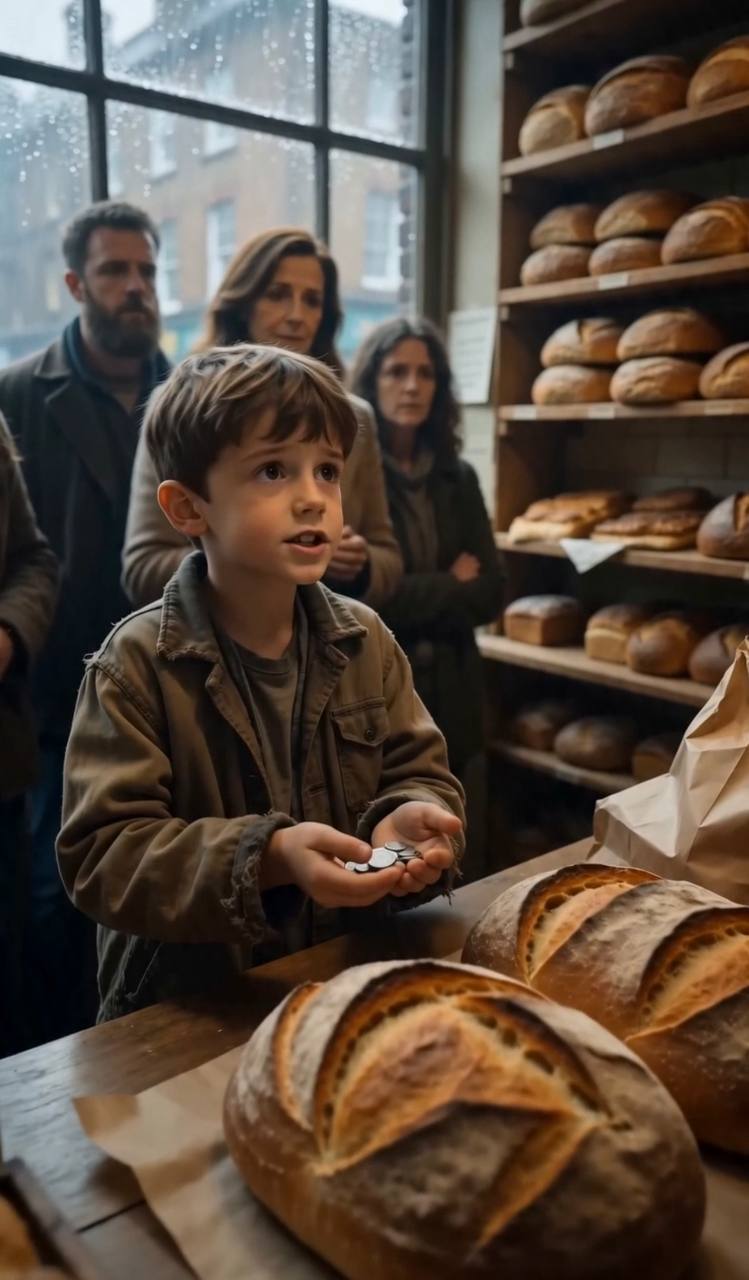
The small bakery on Willow Street always felt warmer than the rest of the world. Outside, winter pressed against the windows. Inside, loaves of bread rested on wooden shelves, golden and fragrant, as if they carried sunlight in their crust.
One afternoon, a little boy stepped inside. He could not have been more than eight. His coat was thin, his shoes were wet, and in his palm he held a few coins, carefully counted and trembling.
The line behind him was busy. People checked their watches, sighed, and shifted impatiently.
The boy looked at the woman behind the counter.
“Can I buy the smallest loaf, please?”
Mrs. Harper glanced at the coins. They were not enough. Not even close.
The boy noticed her silence and quickly pulled his hand back.
“It’s okay,” he whispered. “I’ll come another day.”
But before he turned away, she asked, “Who is it for?”
His eyes filled with shame.
“My mom. She says she already ate, but there was nothing in the kitchen. I heard her crying last night.”
The bakery went quiet.
Mrs. Harper took the freshest loaf from the shelf, wrapped it in brown paper, and placed it in his arms.
“Today,” she said gently, “this one costs exactly what you have.”
The boy stared at her.
“But that’s not true.”
She smiled.
“Then let it be our secret.”
He left holding the bread as if it were something precious.
Years passed. The bakery grew older. The paint faded, the sign cracked, and Mrs. Harper’s hands became slower. One morning, when she feared she would have to close forever, a man in a dark coat entered.
He placed an envelope on the counter.
Inside was a paid deed for the bakery, a new lease in her name, and a small cloth pouch filled with old coins.
Mrs. Harper looked up, confused.
The man smiled through tears.
“You fed my mother when I had nothing,” he said. “Because of you, I believed kind people still existed.”
Mrs. Harper covered her mouth and cried.
The next day, a new sign appeared on the bakery door:
**“No hungry child pays here.”**