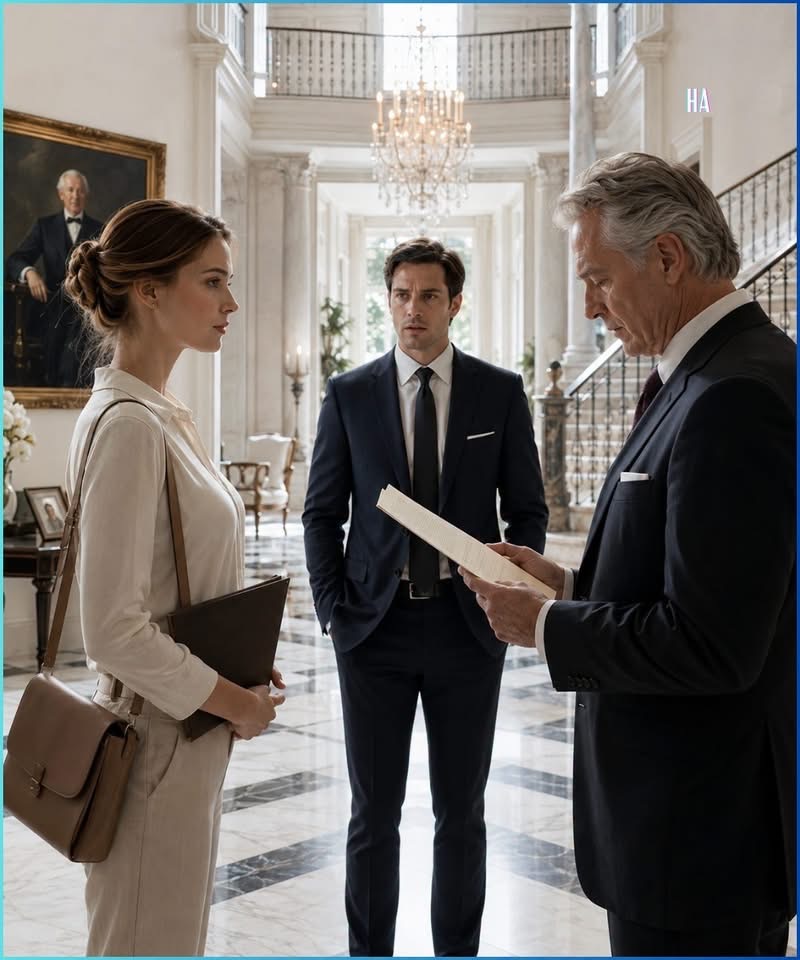
William Carter thought Jenna Harris was the new maid when he found her inside his grandfather’s Pasadena mansion.
He barely looked at her before saying, “The staff entrance is around back. And don’t touch anything in my grandfather’s study.”
Jenna only smiled.
Minutes later, Arthur Carter’s longtime attorney arrived and revealed the truth: Jenna was a historic restoration specialist personally hired by William’s grandfather.
William was already irritated. He planned to renovate the minimum necessary and sell the aging mansion for millions.
Then the attorney opened Arthur’s will.
One sentence changed everything.
“The Carter residence shall not pass to William unless Jenna Harris certifies that its restoration has been completed according to my instructions.”
William stared at her.
“You control whether I inherit my own family home?”
“Apparently,” Jenna replied calmly.
For weeks, the two clashed. William wanted speed and profit. Jenna insisted on preserving every room Arthur had marked as important.
Then, while repairing a damaged wall inside Arthur’s study, Jenna discovered a hidden compartment.
Inside were letters, photographs, and documents revealing something William had never known.
Twenty-three years earlier, William’s father had secretly borrowed money against the family business and nearly destroyed it. Arthur had covered the debt, protected his son’s reputation, and spent years rebuilding what had been lost.
But one letter was addressed directly to William.
Arthur had written:
“You were raised to believe success means owning more. I hope this house teaches you that sometimes success means protecting what cannot be replaced.”
For the first time, William understood why his grandfather had refused to sell.
The mansion wasn’t simply valuable property.
It contained generations of family history—along with sacrifices nobody had ever told him about.
William canceled the sale.
Months later, Jenna completed the restoration and signed the document granting him his inheritance.
But instead of keeping the mansion private, William transformed part of it into a foundation supporting historic preservation and local community programs.
On opening day, he found Jenna standing beside the same antique music box where they had first met.
William smiled.
“I owe you an apology.”
“Several,” she replied.
He laughed.
And for once, William Carter wasn’t thinking about what the mansion was worth.
He was thinking about what it had taught him.