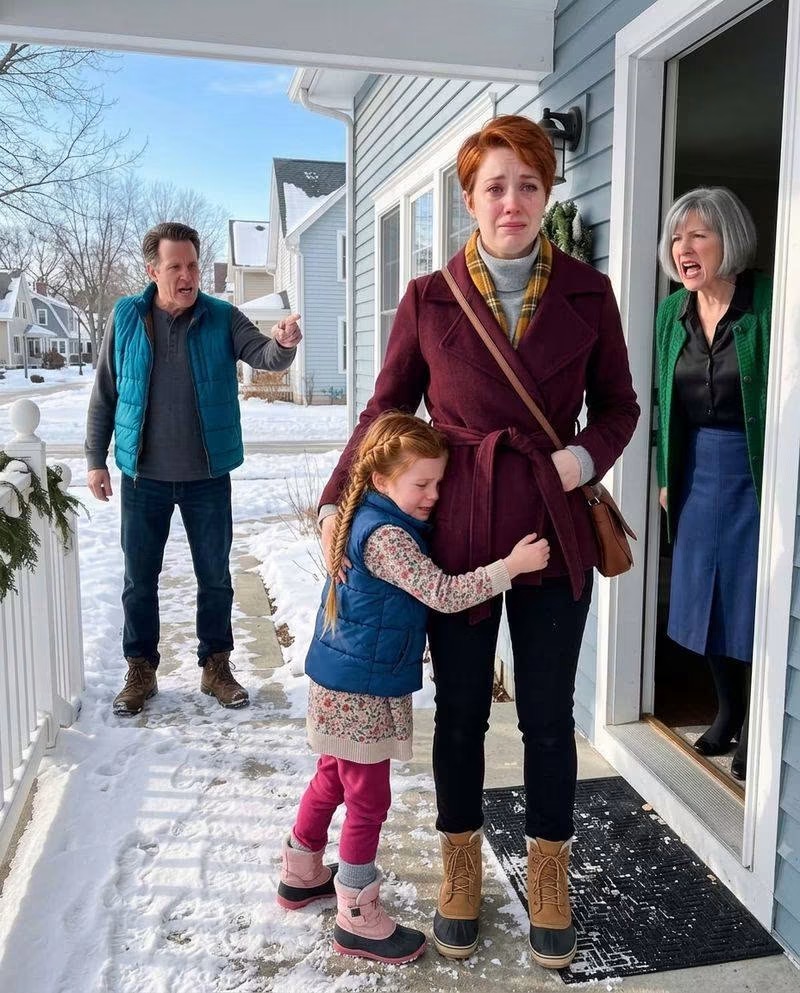
My parents threw me and my five-year-old daughter, Lily, out of their house during a freezing Wisconsin snowstorm because I refused to give them control of her child-support payments.
“We’re done taking care of your mistake,” my mother said.
My father tossed Lily’s backpack into the snow and opened the door.
I didn’t argue. I wrapped my scarf around Lily’s bare feet, carried her against my chest, and walked away.
What they didn’t know was that I had been preparing for this moment for six weeks.
Their demands for money had become increasingly aggressive, so I had secretly copied financial records, saved their threatening messages, and contacted two people they never expected me to speak to again: my older brother Ethan and an attorney.
Four blocks from the house, a police officer spotted us walking through the storm. He immediately took us to a warming center, where Lily received dry clothes, a blanket, and hot chocolate.
Then I made one phone call.
Exactly three hours later, two officers knocked on my parents’ door.
Standing beside them was my attorney—and behind her was Ethan, the son my parents had spent years telling everyone was “dead to the family.”
My mother’s face changed when she saw the thick folder in my attorney’s hands.
For five years, my parents had secretly used personal information belonging to Ethan and me to open accounts, redirect family payments, and cover debts they never told us existed. They had always insisted Ethan was irresponsible when he questioned missing money.
He wasn’t.
He had discovered the truth first.
Now my records confirmed the same pattern.
My attorney handed my father copies of the evidence and explained that the financial activity was being formally investigated. The officers also documented what had happened to Lily that night.
For once, my parents had nothing to say.
Within days, Lily and I moved into a small apartment Ethan helped me find. It wasn’t luxurious, but it was warm, peaceful, and ours.
Months later, the financial dispute was settled. Money that belonged to us was returned, and my parents were legally prevented from accessing any accounts connected to Lily.
They tried calling afterward.
I never answered.
One evening, while Lily and I decorated our tiny living room, she looked up at me.
“Mommy, is this our home now?”
I smiled.
“Yes.”
She hugged me tightly.
And for the first time in years, I understood something simple:
Walking into that snowstorm hadn’t left us homeless.
It had finally led us home.