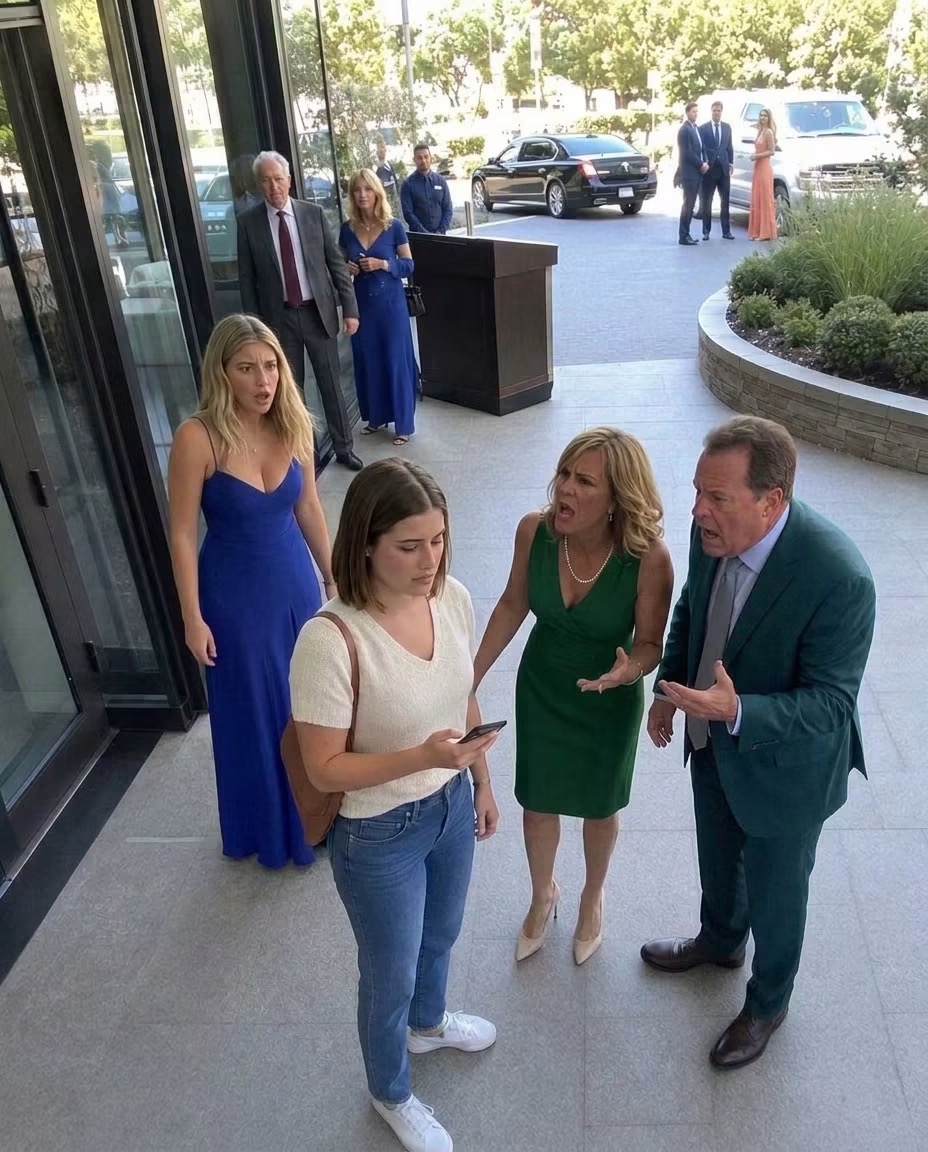
They Said I Wasn’t Good Enough for Their Party
My parents texted me on the morning of their fortieth wedding anniversary:
“Don’t come tonight. Only high-society guests will be there. We don’t want things to feel awkward.”
I stared at the message, then simply replied, “Understood.”
For years, my family believed I was doing ordinary computer work for a small medical company. They never asked many questions. My younger sister Olivia had married a successful cardiologist, lived in Beacon Hill, and fit perfectly into the elegant world my parents admired.
I didn’t.
So while two hundred guests gathered at Boston’s Ashford Hotel, I stayed home.
At 6:47 p.m., Olivia called.
“Hannah, why did you hide this from us?”
“Hide what?”
“Turn on Channel Seven.”
The television showed an interview I had recorded earlier that day. Beneath my face was the headline:
NORTHSTAR MEDICAL ROBOTICS ANNOUNCES $118 MILLION PARTNERSHIP.
Nine years earlier, I had founded Northstar in a rented workshop behind a rehabilitation clinic. Now our mobility technology was being distributed nationally, and I still controlled the company.
My family knew I worked there.
They had never bothered to discover that I owned it.
Then Dad grabbed Olivia’s phone.
“Hannah, get dressed and come here immediately.”
“You told me not to come.”
“That was before we knew.”
I almost laughed.
Then Olivia sent me a photograph that changed everything.
On my father’s table was an investment booklet:
REED CAPITAL DEVELOPMENT — STRATEGIC PARTNER: NORTHSTAR MEDICAL ROBOTICS.
My father was presenting my company to his guests as one of his own business partnerships.
There was only one problem.
I had never signed anything.
Within minutes, I called Northstar’s attorney. He confirmed what I suspected: Dad had used preliminary conversations with one of our junior managers to make his proposal appear legitimate.
I didn’t go to the party.
My lawyer did.
Before dessert was served, he entered the ballroom and quietly handed my father a formal cease-and-desist notice.
The celebration ended early.
The following morning, Dad called.
“You humiliated us.”
“No,” I replied. “You invited two hundred people to celebrate an achievement that wasn’t yours.”
Mom finally asked the question she should have asked years earlier.
“Why didn’t you tell us how successful you were?”
I looked at their original message still sitting on my phone.
“Because I wanted to know whether you could respect me before knowing what I was worth.”
Neither of them answered.
For the first time, I understood that being excluded from their table wasn’t a loss.
I had spent years building my own.
And I no longer needed their invitation to know I belonged there.