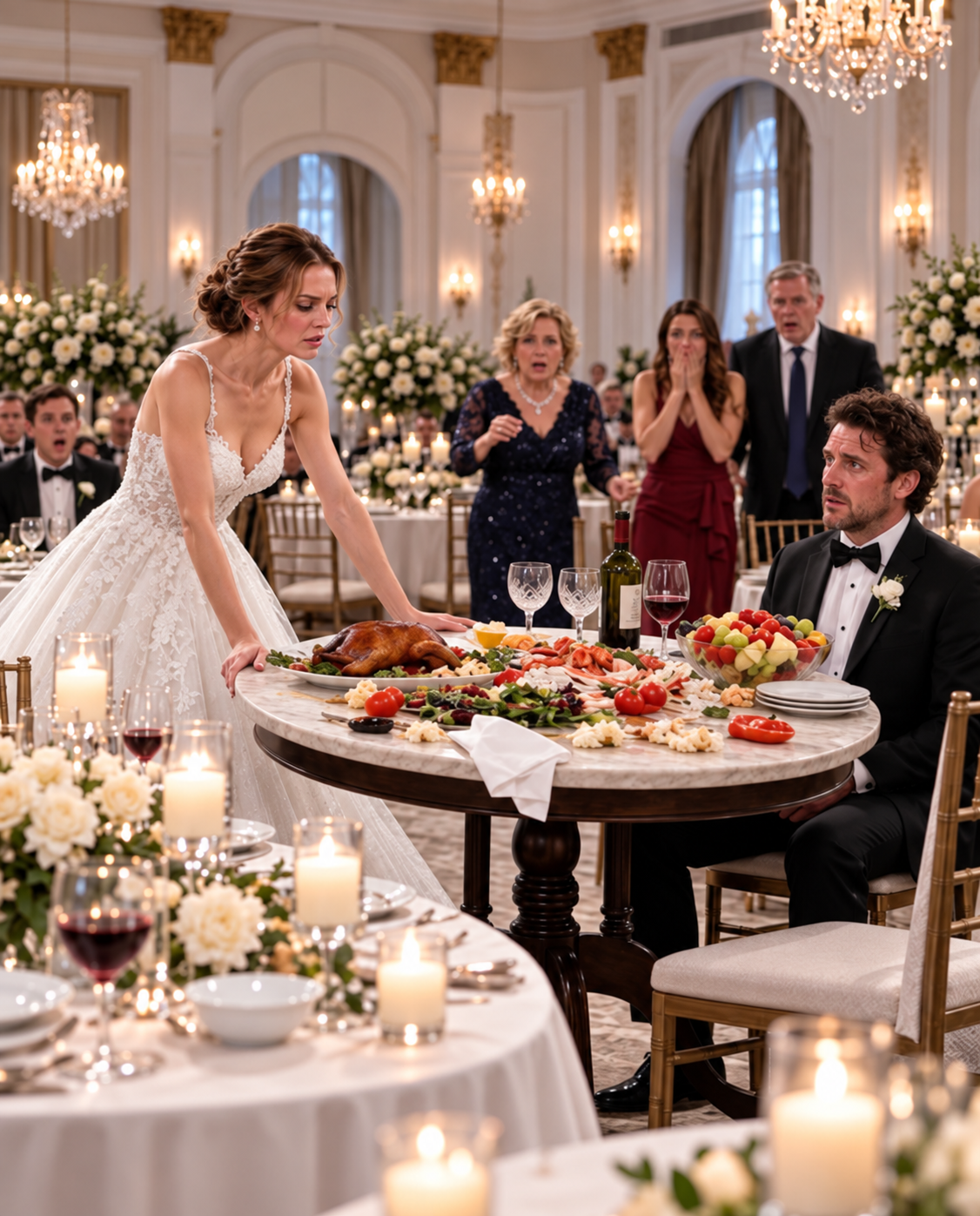
Thirteen days into our marriage, I forgot to put mashed potatoes on my brother-in-law’s plate.
That was all it took for my husband to humiliate me in front of his entire family.
His mother smiled.
His brother laughed.
And Daniel looked at me as though I had failed some important test of what it meant to be his wife.
I didn’t argue.
I didn’t raise my voice.
I simply stood up, picked up my purse, and said one sentence.
“You’re humiliating the only person standing between your family and bankruptcy.”
Daniel’s expression changed instantly.
But to understand why, you have to understand what happened before that moment.
I had worked ten hours that day.
After work, I stopped for groceries, came home, prepared a roast, made vegetables and mashed potatoes, and set the table for Daniel’s family.
I was exhausted, but I wanted the evening to go well.
When everyone sat down, Daniel’s younger brother, Ryan, stared at his plate.
“Where are my mashed potatoes?”
I pointed toward the serving bowl sitting less than three feet away.
“They’re right there.”
Ryan frowned.
“You served everyone else.”
Before I could respond, Daniel looked at me.
“Emily, seriously?”
I stared at him.
“What?”
“You knew Ryan wanted potatoes.”
For a second, I thought he was joking.
“He’s twenty-nine years old, Daniel. He can serve himself.”
Ryan laughed.
“Thirteen days married and she’s already stopped trying.”
Patricia, my mother-in-law, smiled approvingly.
“A good wife understands that when she marries a man, she becomes part of his family. Taking care of that family is part of the responsibility.”
I slowly put my fork down.
Nobody laughed awkwardly.
Nobody told Patricia she was being ridiculous.
They genuinely expected me to apologize.
Daniel leaned closer.
“Just say you’re sorry and let it go.”
“For what?”
“For ignoring Ryan.”
That was the moment something inside me became very calm.
For thirteen days, I had dismissed dozens of little comments.
Daniel correcting how I served guests.
Patricia telling me what a “proper Caldwell wife” should wear to family events.
Ryan joking that my career would become less important once Daniel and I had children.
Daniel suggesting I should stop traveling for work because “married women shouldn’t be gone so much.”
Each incident seemed small enough to ignore.
But sitting at that table, I finally understood.
They weren’t jokes.
They were expectations.
Daniel looked at me again.
“Emily. Apologize.”
I pushed my chair back.
Patricia frowned.
“Where are you going?”
“Home.”
Daniel stared at me.
“You’re leaving over mashed potatoes?”
“No.”
I picked up my purse.
“I’m leaving because all of you think this conversation is normal.”
Ryan rolled his eyes.
“You’re being dramatic.”
That was when I looked directly at my husband.
“You’re humiliating the only person standing between your family and bankruptcy.”
The room went completely silent.
Patricia stopped smiling.
Ryan looked confused.
But Daniel understood immediately.
He followed me outside.
“Emily, wait.”
I kept walking.
“You’re overreacting,” he said.
I stopped beside my car.
“No, Daniel. I think I’ve spent thirteen days underreacting.”
Then I drove away.
What Patricia and Ryan didn’t fully understand was that Caldwell Development, the family construction business they constantly bragged about, was barely surviving.
I knew because restructuring failing companies was my job.
I was a senior restructuring consultant for an investment group specializing in distressed businesses.
Six months earlier, Caldwell Development had lost two major projects within weeks of each other.
The company owed nearly $4.8 million.
Its credit lines were exhausted.
Two banks had rejected applications for additional financing.
Several suppliers were threatening to stop deliveries unless overdue invoices were paid.
Without emergency capital, Caldwell Development could collapse within months.
Daniel had approached my firm before we were married.
I had reviewed the company personally.
The underlying business wasn’t terrible. Caldwell had valuable contracts, experienced employees, equipment, and a recognizable name.
Its biggest problem was financial management.
I believed the company could survive.
Because of my recommendation, my firm agreed to consider an emergency investment.
There was only one problem.
The deal hadn’t closed yet.
Final approval was scheduled for Monday morning.
And my signature was required.
Daniel knew that.
Apparently, somewhere between our wedding and that ridiculous dinner, he had convinced himself that marrying me meant my professional approval was guaranteed.
Saturday morning, Daniel called me eleven times.
I didn’t answer.
At noon, Patricia sent me a message.
“Whatever happened last night was a family disagreement. Mature adults don’t mix personal feelings with business.”
I stared at those words for a long time.
Then I opened my laptop.
Patricia was right about one thing.
Personal feelings had no place in an investment decision.
So I reviewed Caldwell Development’s finances again—this time without giving Daniel the benefit of the doubt.
And I found something I had missed.
Several expenses classified as “executive operational costs” didn’t make sense.
I started tracing them.
One payment covered the lease on Patricia’s luxury SUV.
Another covered Ryan’s apartment.
There were vacations.
Restaurant bills.
Private club memberships.
And then I found charges connected to my own wedding.
Daniel had used company money to pay several vendors.
By Sunday evening, I had identified more than $600,000 in questionable personal spending over two years.
Suddenly Caldwell Development’s financial problems looked very different.
Monday morning, I walked into the investment committee meeting carrying a thick folder.
Daniel was already there with his father, Robert Caldwell, who had founded the company thirty-two years earlier.
Robert smiled nervously.
Daniel didn’t.
He had clearly realized something was wrong.
I presented the original restructuring proposal.
Then I placed the folder on the table.
“Before we proceed, I’m recommending that the investment be suspended pending an independent forensic audit.”
Robert’s face fell.
“Why?”
I opened the folder.
“Because these expenses appear to have been paid by Caldwell Development without a legitimate business purpose.”
I began listing them.
Patricia’s car.
Ryan’s apartment.
Family vacations.
Luxury dinners.
Wedding expenses.
Robert slowly turned toward his son.
“Daniel?”
Daniel swallowed.
“They were temporary.”
“Six hundred thousand dollars is temporary?”
“It’s complicated.”
“No,” I said calmly. “It’s actually fairly simple.”
Daniel glared at me.
“This is because of Friday night.”
I shook my head.
“Friday night is why I stopped assuming you deserved the benefit of the doubt. These documents are why the deal is being suspended.”
That ended the conversation.
Our investment committee voted unanimously to freeze the funding until the audit was complete.
The consequences came quickly.
The audit discovered even more personal spending.
Robert removed Daniel from all financial responsibilities.
Ryan lost the “business development consultant” position that had paid him a generous salary despite him doing almost no work.
Patricia’s vehicle lease and several other personal expenses stopped being paid by the company.
Robert sold two unused properties, renegotiated supplier agreements, and brought in an independent financial controller.
My firm eventually approved a much smaller investment—but only after Robert accepted strict oversight.
Caldwell Development survived.
Daniel’s position in it did not.
Neither did our marriage.
Twenty-seven days after our wedding, I filed for divorce.
Daniel came to my apartment that evening.
He looked exhausted.
“You’re really ending our marriage because of mashed potatoes?”
I almost laughed.
“This was never about mashed potatoes.”
“Then what was it about?”
“Respect.”
He said nothing.
“You watched your family treat me like hired help,” I continued. “And instead of defending your wife, you demanded that I apologize because a grown man had to reach three feet for a serving spoon.”
Daniel looked down.
“I made a mistake.”
“No. A mistake happens once. What happened at that table showed me what you expected our marriage to become.”
He asked whether there was anything he could do.
There wasn’t.
The divorce was finalized months later.
I heard that Robert eventually stabilized the company. He rehired several workers who had been laid off and paid down a significant portion of the supplier debt.
Ryan found a real job.
Patricia sold her luxury SUV.
And Daniel learned something that I suspect nobody in his family had ever forced him to learn before:
Marriage doesn’t turn another person into your servant.
Sometimes people ask whether I regret ending a marriage after only twenty-seven days.
I don’t.
Because I didn’t leave my husband over mashed potatoes.
The potatoes simply revealed something thirteen days of marriage had been slowly teaching me.
Daniel didn’t want a partner.
He wanted someone who would adapt herself to his family, tolerate their disrespect, solve their problems, and smile while doing it.
That woman was never going to be me.
And the strangest part?
If Ryan had simply reached across the table and served himself some mashed potatoes, I might have needed much longer to discover the truth.