My Family Ignored My Daughter’s 13-Hour Surgery—Then Asked Me for $3,500
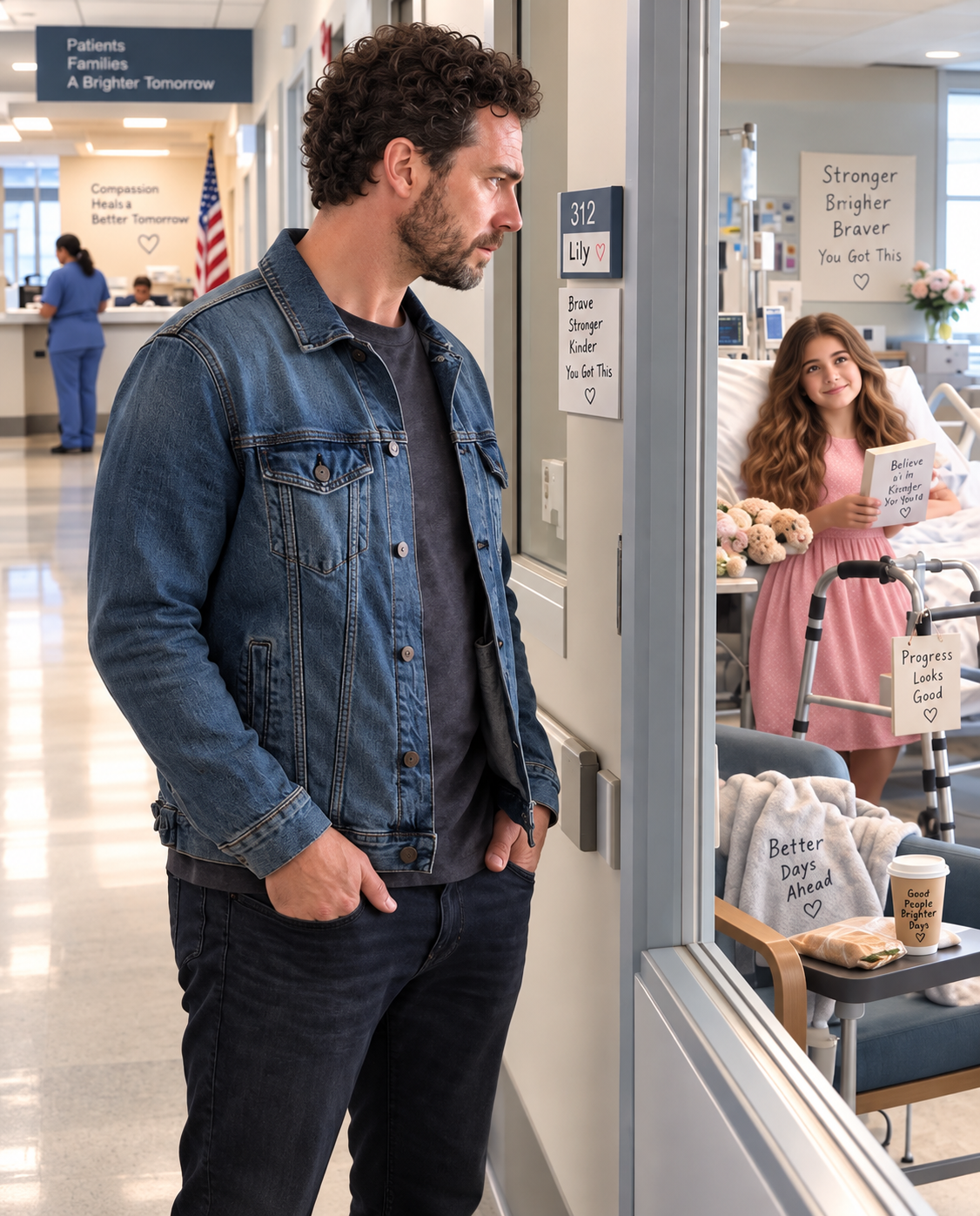
Not one person in my family showed up during my daughter Lily’s thirteen-hour surgery.
No calls. No texts. Nothing.
Three days later, my father finally contacted me. For one foolish second, I thought he wanted to know whether Lily was okay.
Instead, he asked if I could contribute $3,500 toward my younger brother Austin’s destination engagement celebration in the Bahamas.
I stared at the message while Lily slept beside me in her hospital bed.
Then I opened my banking app and transferred exactly one cent.
The note said:
“Put it toward his future.”
After that, I canceled everything.
The streaming subscriptions my parents used. Austin’s gym membership. The emergency credit card Mom kept “just in case.” Shared passwords, memberships, phone-plan extras—anything I was paying for disappeared.
The next morning, at 6:03 a.m., my phone started buzzing outside Lily’s recovery room.
Seventeen missed calls.
Every one from Mom.
When I finally answered, she didn’t ask about Lily.
“What is wrong with you, Jordan?” she snapped. “Your father can’t access Hulu, Austin’s gym membership stopped working, and did you seriously send your father one penny?”
I looked through the glass at my fourteen-year-old daughter.
“Did you forget Lily had surgery?”
“Oh, don’t start.”
“You didn’t call. You didn’t text. You didn’t even ask whether she survived the operation.”
Mom sighed impatiently.
“We knew you had everything under control. Your father hates hospitals, and Austin was busy planning his engagement celebration.”
I almost laughed.
For thirteen hours, I had sat beneath fluorescent hospital lights wondering whether my daughter would wake up able to walk normally again.
And apparently, Austin’s party had been more important.
“You’re being dramatic,” Mom said. “You always make yourself the victim.”
That sentence finally broke something in me.
All my life, Austin had been the one who needed help.
My parents paid his private-school tuition. They helped with his apartment. They rescued him whenever he overspent.
I had worked two jobs through college.
When I became a single father at twenty-four, they told me I had ruined my future.
Yet whenever they needed money, organization, or someone dependable, they called me.
I hung up.
Over the next several days, Lily began walking again.
First with a walker, then with one crutch.
She never asked why her grandparents hadn’t visited.
That hurt more than anything because it meant she had already learned not to expect them.
A week after we came home, an expensive gold-edged invitation arrived.
Austin and Jyn’s Bahamas engagement celebration.
It was addressed to “Uncle Jordan and Lily.”
Lily looked at me.
“Are we going?”
“No, sweetheart. We’ve got better plans.”
She smiled.
A few days later, Austin appeared at my door.
“I get that you’re upset about the surgery thing,” he said.
The surgery thing.
“But you’re the strong one. We knew you could handle it.”
“That’s exactly the problem, Austin. You’ve spent your entire life assuming that because I can handle things, you never have to show up.”
He rolled his eyes.
“Fine. Maybe we messed up. But canceling my gym membership was childish. Jyn needs it for her bridal workouts.”
I laughed.
He hadn’t come to apologize.
He had come for his benefits.
Then he added, “Dad also wondered whether you could cover part of the open bar in the Bahamas. We’re over budget.”
My daughter was relearning how to walk, and my family wanted me to finance cocktails.
I opened the front door.
“Get out.”
Austin stared at me.
“Don’t come back until you’re ready to apologize to Lily.”
“You think you’re better than us,” he snapped. “You’re just bitter.”
I closed the door behind him.
Two days later, Mom left a voicemail accusing me of humiliating the family.
Then she called Lily’s surgery “one little event.”
That night, Lily found me pacing in the kitchen.
“Dad, are you okay?”
I looked at her.
“I’m done trying to make people care when they clearly don’t.”
She crossed the room on her crutch and wrapped her arms around me.
The next morning, a family friend sent me a photograph from Nassau.
My parents stood on the beach beside Austin and Jyn, smiling with drinks in their hands.
The caption read:
“Surrounded by all the people who matter most.”
Strangely, it didn’t hurt the way I expected.
It clarified everything.
They didn’t miss me.
They missed what I provided.
So I opened my laptop and checked every remaining financial connection between us.
That was when I found the old joint savings account.
I had opened it years earlier with Dad when he claimed he needed somewhere to keep emergency funds for Mom. I had barely looked at it since.
Now the balance was almost empty.
I opened the transaction history.
Dozens of transfers had been made over the previous eighteen months.
Payments to travel agencies.
Luxury hotels.
Restaurants.
Deposits connected to Austin’s engagement celebration.
Then I noticed something worse.
Several transfers had been labeled as reimbursements from me.
My name had been used in the payment descriptions, making it appear as though I had approved expenses I had never seen.
I immediately called the bank.
After verifying my identity, the representative froze the account and opened a review.
Dad called less than an hour later.
This time, I answered.
“What did you do?” he demanded.
“I looked.”
Silence.
“You weren’t supposed to touch that account.”
“It has my name on it.”
Dad tried to explain. Then he tried to minimize it. Finally, he blamed me.
“You always said family helps family.”
“Yes,” I replied. “I did.”
Then I looked toward the living room, where Lily was practicing walking without her crutch.
“But I finally learned the difference between helping someone and letting them use you.”
The bank’s investigation took several weeks. Some transfers had technically been authorized years earlier under permissions I had forgotten existed, while others required further review. I didn’t try to turn it into revenge.
I simply removed myself from everything.
Every joint account was closed or separated.
Every shared service ended.
Every financial authorization was revoked.
For the first time in years, there was nothing left for my family to take from me.
Austin eventually sent Lily an apology.
It was short and awkward.
She read it once and placed it in a drawer.
My parents never gave me the apology I wanted.
Instead, they told relatives I had “abandoned the family over money.”
I stopped correcting them.
Because this had never really been about money.
It was about thirteen hours.
Thirteen hours when my daughter was frightened, vulnerable, and fighting for her future—and the people who called themselves family couldn’t spare thirty seconds to send a message.
Months later, Lily walked into her follow-up appointment without a walker or crutch.
When the doctor told her that her recovery had exceeded expectations, she turned toward me with the biggest smile I had seen in months.
We celebrated with chocolate cake at a little café across from the hospital.
Just the two of us.
My phone stayed silent on the table.
And for once, silence felt peaceful.
Lily took another bite of cake and smiled.
“Dad?”
“Yeah?”
“I think these were the better plans.”
I smiled back.
“So do I.”
That day I understood something I should have learned years earlier:
Family isn’t defined by whose name appears beside yours on an account, an invitation, or a family tree.
It’s defined by who sits beside you during the thirteen hours when there is absolutely nothing they can gain from being there.