“TAKE ALL THREE KIDS WITH YOU,” MY HUSBAND SAID. AFTER 19 YEARS, THEY LEARNED WHAT SENDING ME AWAY REALLY COST
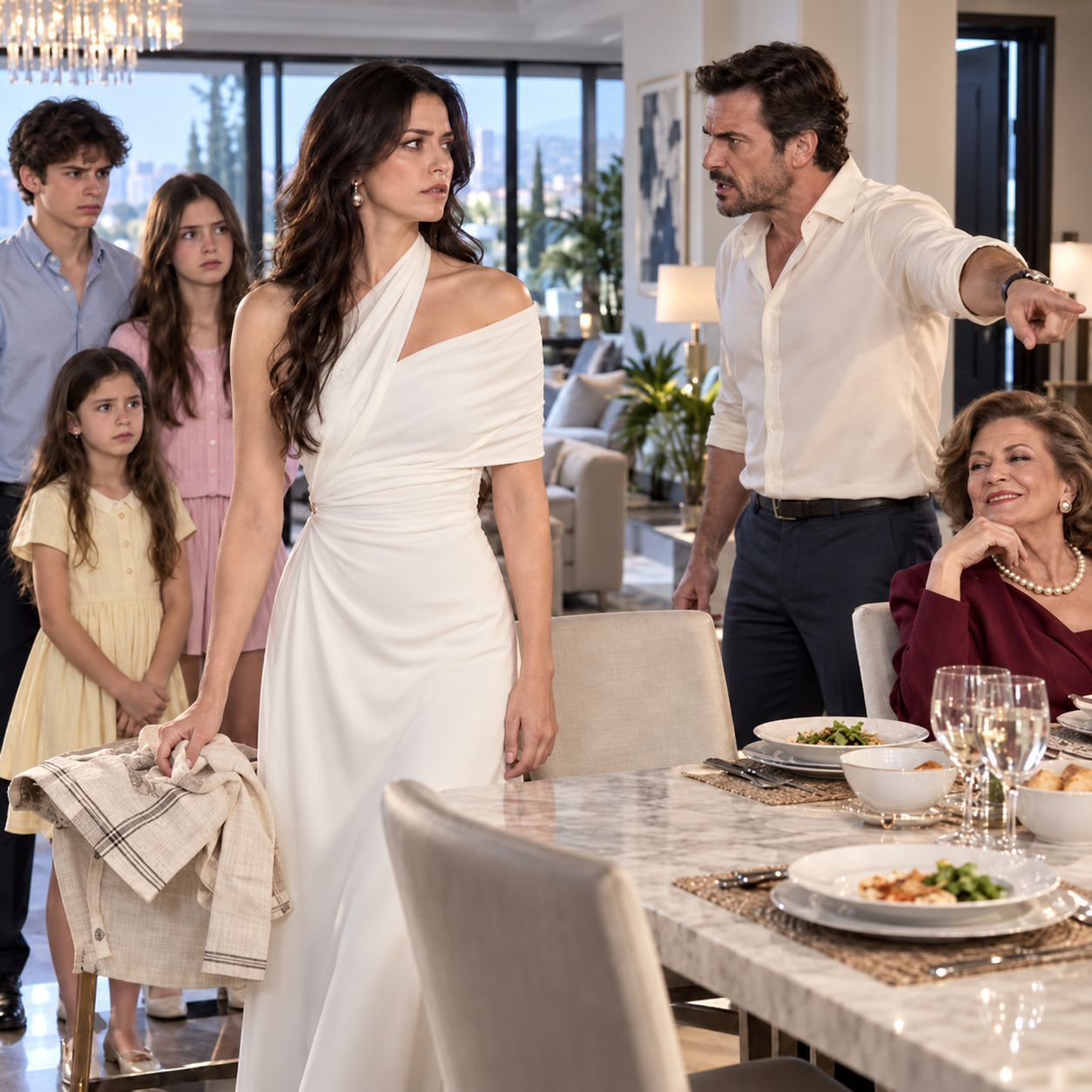
“If you’re leaving this house, take all three of them with you. Don’t leave a single one behind.”
Ricardo stood up from the couch and said it while looking at his own children as though they were boxes that needed to be moved.
Beside him, my mother-in-law, Teresa, laughed.
“Yes, take them away. Maybe we’ll finally have some peace around here.”
Nineteen years.
Nineteen years of waking before five-thirty, making breakfasts, preparing uniforms and packed lunches, driving Teresa to medical appointments, paying bills, running the household, and then sitting in front of my computer working until late at night.
And that was my reward.
I looked at both of them.
“Okay.”
My oldest son, Diego, seventeen, slowly placed his fork on his plate.
“Dad… Grandma… are you sure?”
Ricardo frowned.
“What is that supposed to mean?”
Diego stared at him.
“It means I want you to remember exactly what you just said.”
At the time, I didn’t understand why my son sounded so calm.
I would soon find out.
My name is Mariana Salgado. I’m forty-three years old, an accountant, and I live in Guadalajara.
For almost twenty years, I believed keeping a family together meant enduring one more day.
Ricardo was forty-six and worked in industrial equipment sales.
We had three children: Diego, seventeen; Valeria, fourteen; and Sofía, ten.
Teresa had lived with us for seven years, ever since her husband died.
From then on, practically everything involving her became my responsibility.
Doctor appointments.
Medication.
Groceries.
Bills.
Phone calls.
Even arguments with the neighbors.
Ricardo always had the same answer.
“It’s easier for you to take a few hours off.”
I worked full-time too.
It was just that my time seemed to matter less.
But there was something Ricardo and Teresa had never bothered to understand.
For eight years, I had been running a small accounting firm at night.
I used my maiden name.
Salgado Accounting.
At first, I had two clients.
Then five.
Then twelve.
During the previous three years, I had hired two employees and rented a small office.
Ricardo still referred to it as “your little computer job.”
Teresa would say:
“Instead of playing with numbers, you could be folding laundry.”
I never explained how much money I was making.
Not because it was a secret.
Because they never asked.
Diego, however, paid attention.
He had seen invoices on my desk.
He had seen contracts.
One evening he asked:
“Mom, is this business actually yours?”
“Yes.”
“Does it do well?”
I smiled.
“Well enough.”
I didn’t tell him anything else.
But Diego understood more than I realized.
He had also noticed how Teresa treated his sisters.
Valeria was “too loud.”
Sofía was “too spoiled.”
Diego, as the oldest grandson, was treated differently.
One evening, I heard him tell his grandmother:
“Don’t talk to Sofía like that.”
Teresa replied:
“When you have your own house, you can make your own rules.”
Diego never forgot that sentence.
Neither did I.
The argument that finally ended my marriage started over something seemingly insignificant.
Teresa wanted Valeria’s bedroom because it received more sunlight.
I said no.
Ricardo accused me of putting the children ahead of his mother.
“They’re our children,” I replied.
“My mother is elderly.”
“Your mother already has a bedroom.”
Teresa started crying.
Ricardo lost his temper.
And finally, he said it.
“If you don’t like how things work here, leave. And take all three kids with you.”
So I did.
That evening, I called my sister Elena.
“Can the kids and I stay with you for a few days?”
There was a second of silence.
“How many days?”
“Maybe a week.”
“Mariana, come now.”
I packed four suitcases.
Ricardo watched from the hallway.
He almost looked amused.
“You’ll be back in three days.”
I didn’t answer.
Teresa crossed her arms.
“When you realize how expensive it is to support three children, your attitude will change.”
Diego walked past her carrying his backpack.
“Grandma, I think you’re the one who’s about to learn a few things.”
At 10:14 that night, I closed the door behind us.
I never lived in that house again.
The following morning, I called an attorney.
Three days later, Ricardo received the separation papers.
That was when he stopped laughing.
He called immediately.
“Are you kidding?”
“No.”
“Mariana, we had an argument.”
“No, Ricardo. You told me to leave with our children. I listened.”
“You can’t destroy nineteen years over one sentence.”
“It wasn’t one sentence. It was a summary of nineteen years.”
I hung up.
The first real problem arrived a week later.
Teresa had a cardiology appointment.
At eight that morning, she called me.
“What time are you picking me up?”
“I’m not.”
Silence.
“What do you mean?”
“Ricardo can take you.”
“He has work.”
“So do I.”
She hung up furious.
Then came the bills.
Internet.
Insurance.
Groceries.
Medication.
House maintenance.
For years, I had quietly paid a huge portion of those expenses directly from my account.
I never announced it.
I simply handled them.
When I left, I stopped.
Ricardo called.
“Why hasn’t the homeowners insurance been paid?”
“Because it was coming out of my account.”
“So pay it.”
“I don’t live there anymore.”
“My mother lives here!”
“Teresa is your mother.”
For the first time, he had no answer.
But the real panic began during the divorce.
Ricardo was convinced I would demand half the house.
I didn’t want it.
I wanted shared custody with the children primarily residing with me, my car, my personal savings, and my business.
When my attorney submitted the financial records for Salgado Accounting, Ricardo froze.
The previous year’s revenue was higher than his salary.
Much higher.
“What is this?” he asked.
“My company.”
He stared at me as if I had started speaking another language.
“Your what?”
“The accounting firm where I was ‘playing on the computer.’”
His attorney whispered something to him.
Ricardo’s face went pale.
He initially believed I had hidden money from him.
I hadn’t.
Everything was properly declared.
Taxes paid.
Separate business accounts.
Complete records.
Ricardo simply had never cared enough to learn what I was building.
But there was another surprise.
Three years earlier, when my father died, he had left me a small apartment.
I had rented it out and kept it as an investment.
It was inherited property and remained separate.
When the tenants’ lease ended, I decided to renovate it.
Three bedrooms.
A small office.
A balcony.
It wasn’t Ricardo’s large house.
But it was ours.
When I showed the children the photographs, Sofía asked:
“Is this really going to be our home?”
“Yes.”
“And nobody can make us leave?”
That question broke my heart.
“Nobody.”
Diego looked down.
That was when he finally told me why he had warned his father to remember his words that night.
Two weeks before we left, Diego had overheard Ricardo and Teresa talking in the kitchen.
Teresa had said:
“Mariana will never leave. She couldn’t afford it.”
Ricardo laughed.
“Of course not. Without this house, she wouldn’t know where to go.”
Diego had heard everything.
“I wanted to see what would happen if you finally stopped being afraid,” he told me.
I hugged him.
“You shouldn’t have had to worry about any of this.”
“Someone had to.”
Our divorce was finalized seven months later.
Ricardo kept the house.
I kept my business.
The children lived primarily with me and spent scheduled weekends with their father.
I never prevented them from seeing him.
I didn’t want revenge.
I wanted a life where nobody had to earn the right to be respected.
But Ricardo quickly discovered that owning a house and knowing how to run one were very different things.
Teresa still expected someone to handle everything for her.
Ricardo came home exhausted and found an empty refrigerator.
Medical appointments were forgotten.
Bills became overdue.
Laundry piled up.
The peaceful house Teresa had imagined became a constant source of arguments.
Three months after the divorce, Ricardo came to pick up the kids.
He stood outside my renovated apartment and looked through the open door.
Valeria was baking a cake.
Sofía was doing homework.
Diego was working at the table with his laptop.
I was in my small home office.
Ricardo was quiet for a long moment.
Then he said:
“You seem to be doing well.”
“We are.”
He hesitated.
“Mom isn’t doing well.”
I knew Teresa had no new medical problems.
“What happened?”
“She says she feels abandoned.”
I looked at him.
“She lives with her son.”
Ricardo lowered his eyes.
“I didn’t mean what I said that night.”
“Maybe you didn’t.”
“Then why can’t you forgive me?”
“I have forgiven you.”
He looked up.
“Then come home.”
I shook my head.
“Forgiving someone doesn’t mean returning to the situation that hurt you.”
He said nothing.
Diego appeared behind me.
For several seconds, father and son stared at each other.
Then Diego spoke quietly.
“I told you, Dad. I told you to remember what you said.”
Ricardo closed his eyes.
This time, he didn’t get angry.
“I remember.”
One year later, Salgado Accounting had six employees.
I rented a larger office and finally stopped working until midnight.
Valeria joined her school volleyball team.
Sofía filled our balcony with plants.
And Diego was accepted into university.
On the day of his graduation, before leaving for campus, he handed me a small box.
Inside was a desk plaque.
MARIANA SALGADO
FOUNDER
I laughed.
“What is this?”
“For your new office.”
Then he became serious.
“For years, everyone thought you were the one who needed that house.”
He took my hand.
“But really, that house needed you.”
Those words meant more to me than any divorce judgment ever could.
For nineteen years, I had believed my value depended on how much I could endure.
I was wrong.
A family doesn’t stay together because one person sacrifices herself until there’s almost nothing left.
A house doesn’t become a home because someone pays the mortgage.
It becomes a home when the people inside it feel loved, protected, and respected.
Ricardo had told me to take our three children and leave.
So I did.
He thought he was sending four people away.
Only later did he realize he had sent away the person who had quietly held everything together for nineteen years.
And by the time he finally understood that, I wasn’t angry anymore.
I was already home.