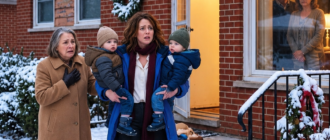
My divorce was finalized at exactly 2:17 on a Thursday afternoon.
By 5:42, my former mother-in-law had ordered me out of the house, announced that the company I had spent seven years building belonged to her family, and watched me walk through the front door carrying two suitcases and a leather tote.
She believed I was leaving with nothing but clothes and the remains of a failed marriage.
She had no idea that inside that tote were documents worth millions.
The original ownership agreement.
Seven years of financial records.
An encrypted drive.
And a document bearing a signature that looked almost exactly like mine.
Almost.
Because I had never signed it.
Lenora Ashby placed her porcelain coffee cup on the marble table with the careful elegance of a woman who believed even cruelty should look expensive.
“You have until tomorrow evening to leave,” she said.
Across from me sat my newly ex-husband, Calder Ashby.
He stared at the floor.
His younger sister, Greer, sat on the arm of the sofa scrolling through her phone as though my eviction were nothing more than background entertainment.
I looked at Lenora.
“Leave what?”
“The house, Merritt. Take your personal belongings. Anything connected to Ashby Creative remains here.”
For the first time that day, I nearly laughed.
“Ashby Creative?”
Greer looked up.
“That’s what everyone calls it.”
“Interesting,” I said. “Because the corporation is still legally called Ashby and Sutter Creative.”
Calder rubbed both hands over his face.
“Merritt, please.”
Those two words had followed me through ten years of marriage.
Merritt, please, when Lenora removed my surname from the company stationery.
Merritt, please, when Greer introduced Calder at an awards dinner as “the founder,” even though I was sitting six feet away.
Merritt, please, when Lenora started attending executive meetings despite having no official position at the company.
It always meant the same thing.
Don’t make me choose between what is right and what is comfortable.
Seven years earlier, Calder and I had started the company inside a cramped coworking room near South Congress in Austin.
We owned two refurbished computers, one folding table, and had $41,300 between us.
Calder was excellent at selling ideas.
I was excellent at turning those ideas into something clients actually wanted.
He brought in prospects.
I created campaigns that made them stay.
We incorporated the company fifty-fifty.
Equal founders.
Equal owners.
At least, that was what I had signed.
Within three years, the agency exploded.
A hospital network hired us.
Then a restaurant franchise.
Then a national outdoor brand doubled our revenue almost overnight.
Eventually, retired energy executive Orson Pike invested in the company in exchange for fifteen percent ownership.
Calder and I diluted equally.
Everything was documented.
Everything was legal.
Everything was clear.
Then Lenora moved from Dallas to Austin because she wanted to be “closer to family.”
Apparently being closer to family required an office in our company, a corporate email address, and an opinion about every decision we made.
The first thing she changed was the stationery.
My surname disappeared.
“Two names make the company sound provincial,” she told me.
Calder promised it was only cosmetic.
Then my presentations started becoming Calder’s presentations.
My strategies became “Calder’s vision.”
Greer joined as director of partnerships despite having no real agency experience.
Every time I complained, Calder accused me of creating tension.
So eventually I stopped complaining.
At least where they could hear me.
Instead, I started documenting everything.
My grandmother Ruthie had taught me that.
She raised me in eastern Kentucky after my parents died in a highway accident when I was five.
Ruthie had never been wealthy, but she could account for every dollar she had spent for twenty years.
Receipts went into labeled envelopes.
Insurance documents went into a fireproof safe.
Tax records were copied.
Before I left Kentucky for college in Texas, she hugged me at the bus station and gave me two rules.
“Never sign anything you haven’t read.”
Then she gripped my wrist.
“And if someone starts explaining why your name doesn’t need to be on something you helped build, start making copies.”
I had broken her first rule once.
I had never broken the second.
Lenora studied me from across the living room.
“This family gave you an extraordinary opportunity.”
“I founded the company.”
“With Calder.”
“Yes.”
“You came to Austin with student loans and freelance work.”
I smiled.
“Calder came with a business plan that used Comic Sans on the revenue projections.”
Greer accidentally laughed.
Calder shot her a look.
Lenora’s expression hardened.
“Mockery doesn’t change your circumstances.”
“My circumstances are fine.”
“Your marriage ended three hours ago.”
“Yes,” I said. “Which means I no longer have to pretend your behavior is normal just to keep Thanksgiving peaceful.”
Calder stood.
“Can we not make this another fight?”
I looked at him.
Six months earlier, I had discovered a message on his phone.
It came from a woman named Sabine Mercer.
I’m glad you finally told her. I’ll be waiting when this is over.
I had photographed the message before returning his phone exactly where I found it.
Calder never knew.
People became cautious when they thought you remembered things.
They became terrified when they discovered you had proof.
I went upstairs and locked myself inside my studio.
Above my drafting desk hung a framed print.
MAKE SOMETHING THAT LASTS.
I removed it from the wall.
Behind it was a small steel safe.
I had installed it three years earlier after several accounting reports mysteriously disappeared from our shared home office.
Inside were contracts, banking records, copyright registrations, screenshots of company correspondence, an encrypted drive, and the original operating agreement.
I unfolded it.
There was my name.
Merritt Sutter — 50% founding membership interest.
Calder’s name appeared beside mine.
After Orson invested, our percentages had been reduced equally.
No ambiguity.
No convenient family interpretation.
Then I removed the document that had kept me awake for the previous two weeks.
According to it, I had voluntarily transferred twenty percent of my ownership to Calder two years earlier.
My signature appeared on page twelve.
It was convincing.
The long curve of the M.
The upward stroke in Sutter.
Even the final uneven letter.
But I had never signed that agreement.
What I remembered signing around that same time was a blank signature sheet.
Lenora had rushed into my office during a banking deadline.
“The lender needs supplemental authorization before five,” she said.
Calder was traveling.
I was preparing a major client pitch.
She claimed the rest of the document was still printing.
And for the first—and only—time in my adult life, I signed something before reading it.
Fortunately, Ruthie’s voice had still been loud enough in my head to make me suspicious.
Before giving Lenora the page, I photographed it.
Blank paper.
My signature.
Nothing else.
Then I texted the images to my attorney, Hollis Beck.
Keep these somewhere.
A knock came at the studio door.
“Merritt?”
Greer.
I slipped the encrypted drive into my tote before opening the door halfway.
“Mom wants to make sure you aren’t taking company property.”
“Does your mother know what company property looks like?”
Greer folded her arms.
“You’re being dramatic.”
“I got divorced today, and your mother gave me an eviction deadline before dinner. I think the dramatic part started without me.”
I packed quickly.
Clothes.
My personal laptop.
Ruthie’s photograph.
My grandfather’s watch.
The legal envelope.
The encrypted drive.
Downstairs, Lenora actually inspected my luggage.
When she noticed the thick legal envelope, she held out her hand.
“What’s that?”
“Paper.”
“What kind of paper?”
“The sort people regret ignoring.”
Her eyes narrowed.
She flipped through several pages but failed to recognize what she was looking at.
Then she handed it back.
“Fine. Take your papers.”
The smile on her face told me she believed she had already won.
Outside, an SUV waited beneath the live oak trees.
Orson Pike had sent it after I called him from the courthouse.
Lenora froze when she recognized the driver.
“Orson sent that?”
“Yes.”
“Why?”
I put on my sunglasses.
“You can ask him tomorrow.”
Calder walked onto the porch.
For the first time that evening, uncertainty appeared on his face.
“Merritt, what have you done?”
“Nothing yet.”
I put my suitcase inside the SUV.
Then I turned toward Lenora.
“You said I had until tomorrow evening. It’s 5:42. Consider the extra twenty-four hours a gift.”
The car drove away.
My phone vibrated before we reached the end of the block.
Hollis.
I finished reviewing the equity amendment metadata. Call me immediately.
Then another message appeared.
Do not contact Calder or Lenora. Do not send anyone the files yet.
A third message followed.
The twenty-percent transfer isn’t the real problem.
Someone reused your signature on another document.
I typed:
What document?
His answer appeared seconds later.
A personal guarantee tied to the company credit facility.
$4.8 million.
My stomach turned cold.
Then another message arrived.
And that still isn’t the worst thing I found.
I called immediately.
“Hollis?”
“Where are you?”
“In Orson’s car.”
“Good. Listen carefully. The guarantee says you personally guaranteed $4.8 million of corporate debt fourteen months ago.”
“I didn’t.”
“I know.”
“How?”
“Because according to the notarization, you signed it in Austin at 11:40 a.m. on March ninth.”
I frowned.
“So?”
“You were giving a keynote presentation at the BrandWorks conference in Denver at that exact time.”
My breath caught.
There were photographs.
Hundreds of attendees.
Video recordings.
Travel records.
“Who notarized it?”
Silence.
Then Hollis answered.
“Lenora.”
I stared through the window.
Lenora was a commissioned notary.
She sometimes witnessed routine business paperwork.
But notarizing a forged signature on a $4.8 million guarantee was something entirely different.
“What else did you find?”
“Transfers.”
“How much?”
“Approximately $1.9 million.”
“To where?”
“A consulting company called Silver Ash Management.”
“I’ve never heard of it.”
“You’re not supposed to have.”
“Who owns it?”
Another pause.
“Greer.”
Suddenly everything became clear.
My former sister-in-law had been receiving a salary from the company while nearly two million dollars were being routed through an outside business she controlled.
“What were the payments called?”
“Strategy consulting. Executive development. Brand acquisition advisory.”
Greer had once asked me what EBITDA meant during an investor meeting.
I almost laughed.
Instead, I told Hollis one thing.
“Save everything.”
Orson was waiting for me in a private room at his hotel.
He was seventy-one, silver-haired, brutally intelligent, and not interested in comforting lies.
“I’ve suspected irregularities for months,” he told me.
“Why didn’t you tell me?”
“I tried.”
He slid a folder across the table.
Last November, Orson had requested an independent audit.
Three days later, Calder had sent him a board consent postponing it.
My signature was on the consent.
I stared at the page.
“I never signed this.”
“I know.”
Hollis arrived twenty minutes later with two forensic accountants.
We worked almost until dawn.
By midnight, I understood why Lenora had been so eager to get me out of the house.
This wasn’t simply about the divorce.
For almost three years, somebody had been systematically restructuring the company around me.
Documents claimed I had surrendered voting rights.
Other documents showed me approving suspicious payments.
I had supposedly guaranteed debts.
I had supposedly delayed audits.
Some signatures were digitally copied.
Others had been reconstructed.
At least two documents appeared to have been created using the blank signature page Lenora had once taken from my office.
But Lenora had made one serious mistake.
She assumed I didn’t keep records.
I kept everything.
Emails.
Calendars.
Travel receipts.
Cloud backups.
Version histories.
Original files.
Text messages.
And, most importantly, photographs of that blank signature sheet.
At 4:06 in the morning, Hollis closed his laptop.
“Merritt, this is no longer a divorce dispute.”
“I know.”
“This could become a criminal investigation.”
“I know.”
“Once we report it, you can’t control how far this goes.”
I looked at the photograph of Ruthie I had placed beside me.
Never sign what you haven’t read.
Start making copies.
“Report it,” I said.
The emergency board meeting began at 8:30 the next morning.
Lenora entered first.
Greer followed.
Then Calder.
They walked into the conference room smiling.
They didn’t know yet.
I sat beside Orson and Hollis.
Calder stopped when he saw us.
“Merritt?”
Lenora stared at Hollis.
“What is her divorce attorney doing here?”
“He isn’t here about my divorce.”
I pointed toward the chairs.
“Sit down.”
Lenora laughed.
“I don’t take instructions from you.”
Orson spoke quietly.
“You do in this room.”
Her smile disappeared.
Under his investment agreement, Orson had veto rights over extraordinary financial matters.
Lenora had always mocked that clause.
Now it mattered.
Everyone sat.
Hollis placed three documents on the table.
“The first is an alleged equity-transfer agreement signed by Merritt Sutter.”
Nobody spoke.
“The second is a personal guarantee totaling $4.8 million.”
Calder turned toward his mother.
“The third is a consent delaying an independent audit.”
Now Calder looked at me.
“What is this?”
“That,” I replied, “is an excellent question.”
Hollis continued.
“All three documents contain signatures represented as Merritt’s. Merritt denies signing any of them.”
Lenora finally spoke.
“People forget what they sign.”
“Sometimes,” I said.
Then I projected a photograph onto the conference room screen.
A blank sheet of paper.
My signature at the bottom.
Timestamp: 3:46 p.m.
Then a second photograph.
Then the message I had sent Hollis moments later.
Keep these somewhere.
Lenora’s face changed.
Greer put down her phone.
I turned toward Calder.
“Did you know?”
“Merritt—”
“Did you know your mother was using my signature?”
“I didn’t know about the guarantee.”
“That wasn’t my question.”
He said nothing.
And his silence gave me my answer.
Maybe he hadn’t known everything.
But he had known enough.
Hollis opened another folder.
“We also discovered approximately $1.9 million in transfers to Silver Ash Management.”
Greer went pale.
Orson looked directly at her.
“What services did Silver Ash provide?”
“It was consulting.”
“What consulting?”
“For the company.”
“Name one deliverable.”
She couldn’t.
Lenora interrupted.
“That money compensated Greer for additional responsibilities.”
“Then why wasn’t it paid as compensation?” I asked.
“It was tax planning.”
“Approved by whom?”
“The board.”
“No,” Orson said. “It wasn’t.”
Calder shoved his chair backward.
“Mom, what did you do?”
Lenora turned toward him.
“Everything I did was to protect this family.”
There it was.
The truth.
Not the business.
Not the employees.
Not even Calder.
The family.
And to Lenora, I had never really been part of it.
“She was leaving you,” Lenora said. “She could have taken control of everything.”
“I owned part of everything,” I replied.
“You married into this family.”
“I founded the company.”
Lenora slammed her hand against the table.
“You think your campaigns built everything? Calder brought credibility. Calder brought relationships.”
“And I created what the clients paid for.”
Calder suddenly spoke.
“Enough.”
Everyone stopped.
He stared at his mother.
“Did you forge Merritt’s signature?”
Lenora said nothing.
“Did you?”
“I protected you.”
Calder laughed once.
It sounded broken.
“No, Mom. You protected yourself.”
Greer began crying.
“I didn’t know about the signatures.”
Lenora turned sharply.
“Greer—”
“No! You told me Merritt approved the payments.”
The door opened.
Two attorneys representing the bank entered with an outside forensic investigator.
Lenora stood.
“What is this?”
Hollis folded his hands.
“The lender was notified this morning that a personal guarantee in its possession may contain a fraudulent signature.”
One of the bank attorneys addressed us.
“The disputed guarantee has been frozen pending investigation. We are also reviewing all withdrawals from the related credit facility.”
Lenora stared at me.
A year earlier, that look would have frightened me.
Now I felt nothing.
The following seventy-two hours changed everything.
The company’s financial systems were preserved for review.
Lenora lost all administrative access.
Greer was placed on leave.
Calder voluntarily stepped aside as CEO while investigators determined what he had known.
And I returned to the company.
Not as Calder’s wife.
Not as Lenora’s inconvenient daughter-in-law.
Not as the woman whose name had quietly disappeared from the stationery.
I returned as a founder.
The investigation lasted five months.
What investigators discovered was worse than any of us expected.
Lenora had repeatedly manipulated documents, sometimes with help from an outside bookkeeper who believed Calder had approved her actions.
Silver Ash Management had received $1.94 million.
Some expenses were legitimate.
Many were not.
There were luxury leases.
Travel expenses.
A condominium deposit.
Private-school tuition.
And payments to a consulting company owned by Sabine Mercer.
The woman Calder had been having an affair with.
Apparently Lenora had known about Sabine long before I did.
And she had been helping direct company money toward her business.
One evening, five months after the investigation began, Calder appeared outside my temporary apartment.
I didn’t invite him in.
He looked older.
“I didn’t know about the stolen money,” he said.
“I believe you.”
Relief appeared on his face.
Then I continued.
“But you knew your mother was trying to reduce my power.”
He looked away.
“She told me it was temporary.”
“And you allowed it.”
“I thought it would stop the fighting.”
“No, Calder. You thought it would stop me from fighting.”
He closed his eyes.
“I’m sorry.”
“I know.”
“I lost everything.”
I shook my head.
“No. You still have money. You still have a career. You still have choices.”
He looked at me.
“What did I lose, then?”
“The luxury of never having to choose.”
Neither of us spoke for several seconds.
Then he asked the question I never expected.
“Did you ever really love me?”
“Yes.”
“Do you still?”
For once, I didn’t need time to think.
“No.”
He nodded.
Then he walked away.
Lenora eventually resolved the civil claims against her while the authorities handled the remaining legal issues separately.
She surrendered every unofficial role she had tried to exercise over the company.
Greer resigned and repaid a substantial amount of the money Silver Ash had received.
She later sent me a four-page apology.
I read it.
I never responded.
Calder retained part of his legitimate ownership but permanently resigned from day-to-day management.
Six months after my divorce, Orson and I restructured the business.
Employees received an equity pool.
Financial controls were rebuilt from the ground up.
Major transactions required independent verification.
And my name returned to every document where it belonged.
For a while, the company was once again called Ashby & Sutter Creative.
Then one morning my operations director entered my office carrying a mock-up for new lobby signage.
“You really want to keep Ashby in the name?” she asked.
I looked at the design.
Then smiled.
“No.”
Three months later, workers removed the old letters from the front of our Austin headquarters.
In their place appeared:
SUTTER CREATIVE GROUP.
Orson stood beside me on the sidewalk as the final letter went into place.
“You know Lenora always said the Sutter name sounded provincial.”
I laughed.
“My grandmother would have loved hearing that.”
“What do you think Ruthie would say now?”
I looked up at the sign.
“She’d probably ask whether I made backup copies.”
Orson smiled.
“Did you?”
“Three.”
A year after my divorce, Sutter Creative Group recorded the strongest quarter in its history.
We opened a second office.
Promoted three women who had spent years doing executive-level work without executive titles.
And established the Ruthie Sutter Scholarship for first-generation design students from rural communities.
On the anniversary of the day Lenora threw me out, I was working late when my assistant carried a package into my office.
There was no return address.
Inside was the framed print that had once hung above my desk at the house.
MAKE SOMETHING THAT LASTS.
A small handwritten note was attached.
I found this while selling the house. I think it belongs to you.
— Calder
I stared at the words on the print.
For years, I had thought they referred to the company.
But companies could change names.
Houses could be sold.
Marriages could end.
Money could disappear.
What lasted was the part of you that remembered who you were before everyone else began trying to rewrite your story.
I hung the print behind my desk.
Underneath it, I placed one photograph.
Ruthie.
Seventy-eight years old.
Dirt on her jeans.
One hand resting on her hip.
Smiling like she already knew everything would eventually make sense.
Lenora had believed she was throwing a divorced woman out of her family’s home.
Instead, she had pushed me through the final door I had been afraid to open.
She thought I left carrying two suitcases and a broken marriage.
She was wrong.
I walked out carrying proof.
Proof of what I had built.
Proof of what they had taken.
Proof of who I had always been.
And, for the first time in years, my name—and my life—belonged entirely to me.