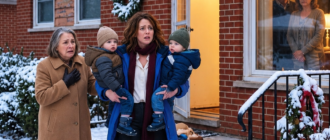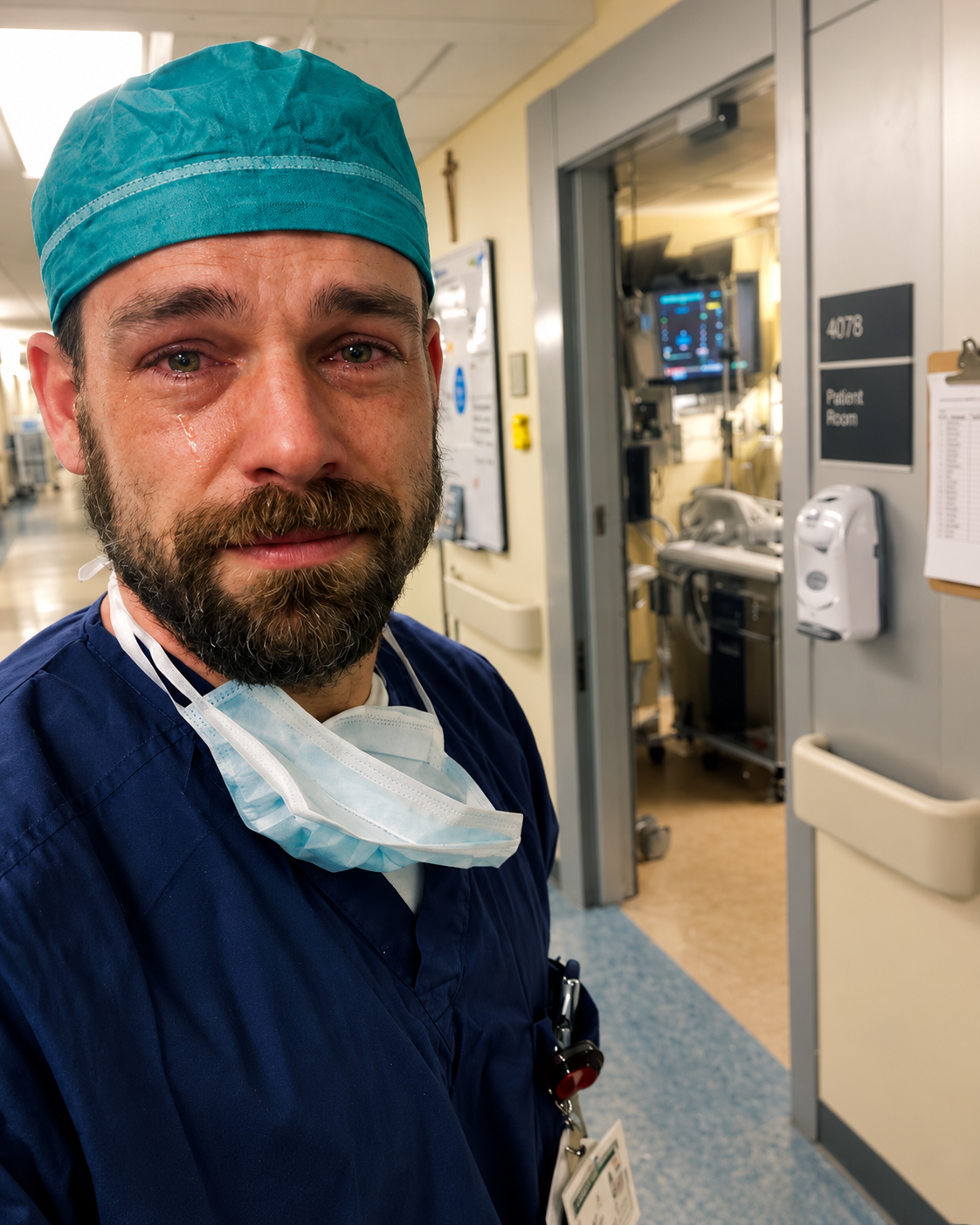
I went to surprise my husband at work with his favorite lunch.
Instead, one of his colleagues looked at me with tears in his eyes and whispered:
“He didn’t tell you anything, did he?”
That was the moment I realized my husband had been keeping a secret from me for almost a year.
Ben and I had been married for eleven years.
During those eleven years, I had learned that being married to a surgeon meant sharing your husband with strangers.
Emergency calls interrupted dinners. Holidays were rearranged around operations. Vacations sometimes ended before they began.
I accepted it because I knew what Ben did mattered.
He was a respected cardiac surgeon, the kind of doctor families remembered for the rest of their lives.
And I was proud of him.
But during the previous year, something had changed.
Ben began coming home later than usual.
First it was once or twice a week.
Then almost every night.
He missed our anniversary dinner.
He missed my thirty-eighth birthday.
And when our daughter Sophie turned nine, he appeared on a video call for barely two minutes.
“Happy birthday, sweetheart,” he told her from what looked like an empty hospital hallway. “Daddy loves you.”
Then someone called his name, and the screen went dark.
Sophie tried not to look disappointed.
“It’s okay,” she said.
But I knew it wasn’t.
That night, after putting her to bed, I called Ben.
“Something has to change.”
There was a long silence.
“I know.”
“Then tell me what’s happening.”
“We’re short-staffed.”
“That’s what you’ve been saying for months.”
Another silence.
Finally, he whispered, “I’m sorry.”
I wanted to be angry.
But every time he came home, anger became difficult.
He looked exhausted.
He had lost weight.
Sometimes his hands shook when he thought I wasn’t watching.
Once, I woke at three in the morning and found him sitting on the edge of our bed with his face buried in his hands.
“Ben?”
He quickly wiped his eyes.
“What’s wrong?”
“Nothing.”
“You’re crying.”
“Long night.”
I sat beside him.
“Did you lose a patient?”
He stared at the floor.
“Something like that.”
Then he kissed my forehead and said, “Go back to sleep.”
I should have pushed harder.
I would spend months wishing I had.
The following Tuesday, I decided to surprise him.
I made grilled chicken with rosemary potatoes, packed a slice of his favorite apple pie, and placed everything inside a lunch bag.
Before leaving, I added a note.
“You don’t always have to take care of everyone else. Today, let me take care of you.”
I smiled as I imagined him reading it.
At the hospital, I took the elevator to the surgical floor.
Several nurses knew me, so I expected the usual greetings.
Instead, the moment I approached the nurses’ station, the head nurse, Carol, froze.
“Emily?”
“Hi.”
She stared at the lunch bag in my hand.
“What are you doing here?”
“I brought Ben lunch. Is he in surgery?”
Carol glanced at another nurse.
That tiny movement immediately made my stomach tighten.
“Don’t tell him I’m here,” I said, forcing a smile. “I want to surprise him.”
Neither woman answered.
“Carol?”
“I…”
Her face changed.
“Where is my husband?”
Before she could answer, I saw Arnold Hayes walking toward us.
Arnold had worked with Ben for more than fifteen years.
Normally, he was the calmest man in the building.
That day, he looked as though he hadn’t slept.
“Arnold.”
He stopped.
“Emily.”
“Where’s Ben?”
His eyes moved toward Carol.
Then back to me.
“Please,” I said. “Someone tell me what’s going on.”
Arnold looked at the lunch bag.
Then at my face.
Something in his expression collapsed.
“He didn’t tell you anything, did he?”
My heart began pounding.
“Tell me what?”
Arnold closed his eyes for a second.
“Come with me.”
He led me into an empty consultation room and closed the door.
I remained standing.
“Where is Ben?”
“He’s downstairs.”
“In surgery?”
Arnold swallowed.
“No.”
The room suddenly felt too small.
“He collapsed this morning.”
I grabbed the edge of the table.
“What do you mean collapsed?”
“He lost consciousness while reviewing a patient’s chart.”
“Why?”
Arnold didn’t answer immediately.
That silence frightened me more than anything else.
“Arnold.”
“He has leukemia.”
For a moment, I actually thought I had misunderstood him.
“What?”
“Acute myeloid leukemia.”
I stared at him.
“No.”
“Emily—”
“No. Ben doesn’t have leukemia.”
Arnold’s eyes filled with tears.
“He was diagnosed eleven months ago.”
Eleven months.
Almost exactly when everything had started changing.
The late nights.
The weight loss.
The shaking hands.
The tears.
I felt as if the floor had disappeared beneath me.
“He knew?”
“Yes.”
“And all of you knew?”
“A few of us.”
I couldn’t breathe.
“He told us you knew.”
I looked at Arnold.
“He told you what?”
“He said you and Sophie knew about the diagnosis and that you had agreed he could continue working as long as possible.”
I laughed once.
It was a horrible, empty sound.
“He lied.”
Arnold went pale.
“He told me he was staying late because you were short-staffed.”
Arnold lowered his head.
“He was staying late because he was receiving treatment here.”
That sentence broke something inside me.
Ben hadn’t been missing dinners because he was operating.
He had been receiving chemotherapy.
Alone.
“He would come in early for blood tests,” Arnold continued quietly. “Sometimes treatment was scheduled after his shift. He didn’t want anyone treating him differently.”
“Why didn’t someone call me?”
“We thought you knew.”
I covered my mouth.
“Where is he now?”
“ICU.”
I ran.
I don’t remember the elevator ride.
I barely remember signing anything at the ICU desk.
All I remember is seeing Ben through the glass.
My husband, who had spent his life standing over operating tables saving other people, was lying motionless beneath a white blanket.
Lines ran into his arms.
An oxygen mask covered part of his face.
For the first time in eleven years, he looked fragile.
I walked inside.
His eyes opened slowly.
When he saw me, fear crossed his face.
Not relief.
Fear.
“Emily.”
I put the lunch bag on the chair.
“You forgot lunch.”
His eyes filled with tears.
“I was going to tell you.”
“When?”
He looked away.
“After Sophie’s birthday.”
“That was three months ago.”
“I know.”
“After Christmas?”
Silence.
“After our anniversary?”
He closed his eyes.
I wanted to scream.
I wanted to shake him.
Instead, I sat beside him and whispered:
“You let me think you were choosing this hospital over us.”
A tear rolled down his cheek.
“I’m sorry.”
“You let Sophie believe you didn’t care enough to come to her birthday.”
“I know.”
“Why?”
His voice cracked.
“Because I was scared.”
It was the first time I had ever heard Ben admit those words.
He had held grieving parents while their children died.
He had operated during emergencies that made other surgeons step away.
He had always seemed unbreakable.
But there he was, crying like a frightened boy.
“My father got sick when I was fourteen,” he said. “Once we knew, everything in our house became about cancer. Every breakfast. Every conversation. Every holiday. We stopped being a family and became people waiting for someone to die.”
He looked at me.
“I couldn’t do that to you.”
“So you decided to disappear while you were still alive?”
His face crumpled.
“I thought I was protecting you.”
“No, Ben. You were protecting yourself from seeing us afraid.”
He turned away.
And I knew from his silence that I was right.
That afternoon, the hematologist explained everything.
Ben had initially responded to treatment.
Then, six weeks earlier, tests showed the disease was progressing.
He now needed a stem-cell transplant.
Without it, his chances were frighteningly small.
“And the collapse?” I asked.
“Severe anemia and infection,” the doctor said. “His immune system is extremely compromised.”
I looked at Ben.
“Six weeks?”
He said nothing.
Another secret.
That night I went home and sat Sophie down.
There is no good way to tell a nine-year-old that her father has cancer.
So I didn’t search for perfect words.
I told her the truth.
She cried.
Then she became angry.
“Why didn’t Daddy tell me?”
“He thought he was protecting us.”
“That’s stupid.”
Despite everything, I almost laughed.
“Yes,” I said. “It was.”
The next morning Sophie drew a picture of the three of us holding hands.
Above us she wrote:
NO MORE SECRETS.
I taped it to Ben’s hospital wall.
When he saw it, he cried.
Three weeks later, doctors found a compatible donor through the registry.
The transplant was brutal.
There were infections, fevers and nights when I sat beside Ben convinced that the morning might arrive without him.
But slowly, his blood counts improved.
Weeks became months.
One afternoon, nearly six months after the day I had walked into the hospital carrying lunch, Ben came home.
Sophie had covered the front door with balloons.
He stood on the porch wearing a mask, twenty pounds lighter, leaning on a cane.
But he was alive.
Sophie ran toward him, then stopped because the doctors had warned us about germs.
Ben opened his arms anyway.
She looked at me.
I nodded.
She hugged him carefully.
He began crying before she did.
A year later, Ben’s tests showed no evidence of disease.
He returned to medicine eventually, but not in the same way.
He stopped working seventy-hour weeks.
He stopped answering non-emergency calls during family dinners.
And on Sophie’s tenth birthday, he turned his phone completely off.
At dinner, he pulled the old note I had written from his wallet.
The one I had placed inside his lunch bag.
“You still have that?” I asked.
He nodded.
“You don’t always have to take care of everyone else,” he read softly.
Then he looked at me.
“It took me almost losing everything to understand that.”
I reached across the table and took his hand.
Ben’s illness changed our marriage.
But not because cancer almost took him away from us.
It changed us because we finally understood that love is not protecting someone from the truth.
Sometimes love means trusting them enough to let them be afraid with you.
And in our house, Sophie’s old drawing still hangs in the hallway.
Three people holding hands.
And above them, written in purple crayon, are the four words that became our family’s most important rule:
NO MORE SECRETS.