My Mother Banned My Seven-Year-Old Daughter from Thanksgiving — But Forgot Who Was Paying for Everything
My mother called two weeks before Thanksgiving and said something I will never forget.
“Clara, there’s been a change of plans. Ivy isn’t invited this year. Your sister wants a peaceful holiday, and your daughter is simply too much trouble.”
I stood frozen in the hallway of my clinic.
My seven-year-old daughter had been counting the days until Thanksgiving. She had already made drawings for her grandparents and picked out her favorite sweater.
And now my own mother wanted me to leave her behind.
The worst part? I was paying for the entire celebration.
My name is Clara. For three years, I’d been the person my family turned to whenever money became a problem.
I’d helped my parents with rent, covered overdue bills, and purchased a car for my younger sister, Briana.
Altogether, I’d spent more than $60,000 helping them.
I never demanded repayment. I believed family should help family.
But apparently, that kindness didn’t extend to my daughter.
Briana had recently started dating a man named Travis, who had a ten-year-old daughter. She wanted to impress them with an elegant Thanksgiving at the lake house I’d rented.
According to my mother, Ivy was too young, too energetic, and likely to spoil the atmosphere.
“So Travis’s daughter is welcome, but mine isn’t?” I asked.
“Don’t make everything about yourself, Clara,” Mom replied. “Briana finally has a chance at happiness.”
“And what about Ivy’s happiness?”
“Children need to learn that they can’t always get what they want.”
I felt something inside me change.
For years, I’d tolerated my mother’s favoritism. I’d accepted Briana’s selfish behavior because keeping the family together seemed more important than arguing.
But I would not teach my daughter that she had to accept humiliation to earn a place in her own family.
“I’m not leaving Ivy behind,” I said.
“Then find someone to watch her. Surely you can afford a babysitter.”
I looked at the phone in disbelief.
They wanted me to pay for their luxurious holiday while my little girl stayed home with a stranger.
I ended the call without another word.
Then I opened my laptop.
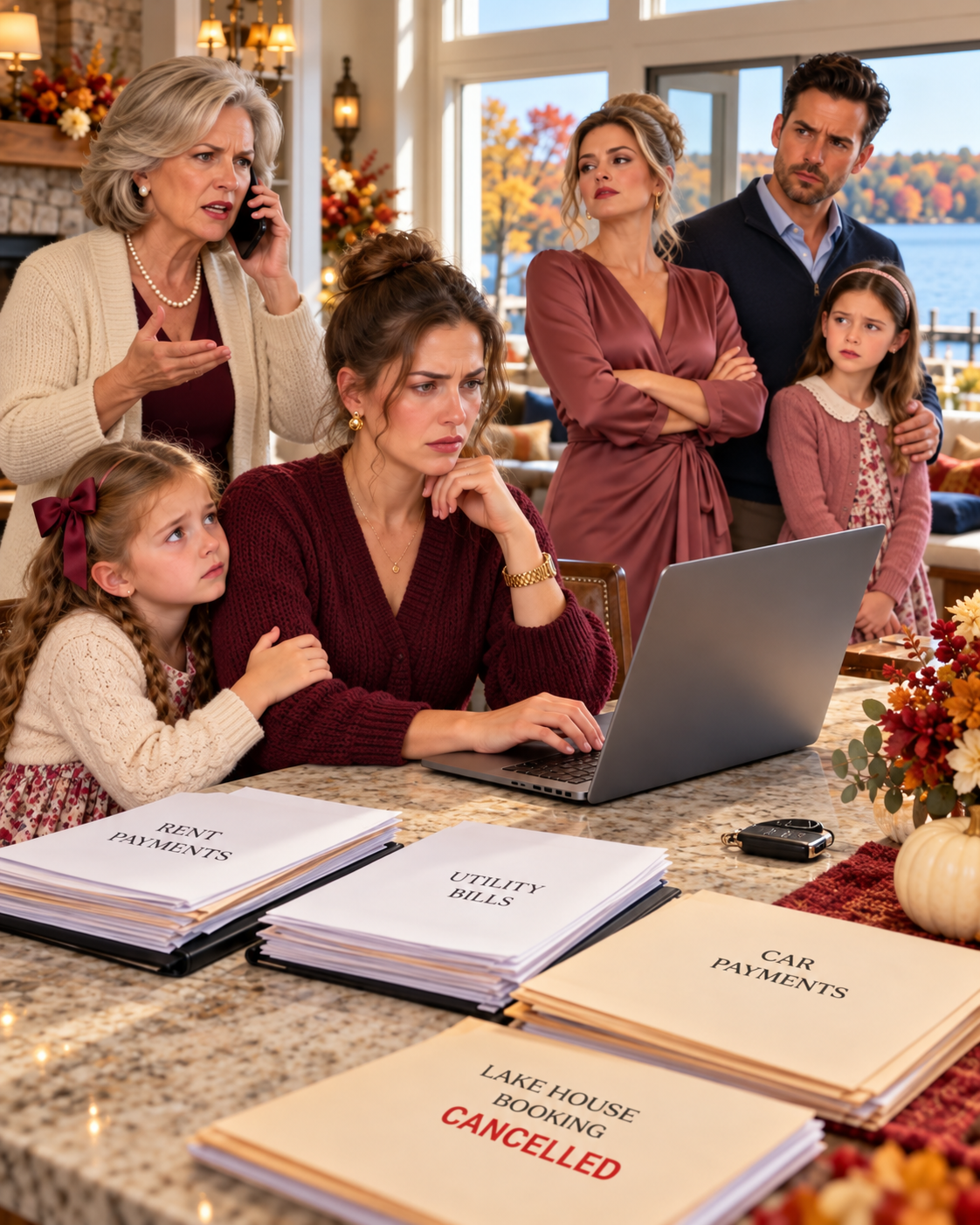
The lake house reservation was in my name. The deposit and remaining balance had been paid from my account.
I contacted the rental agency and canceled the booking.
I lost part of the deposit, but the rest was refunded.
Next, I reviewed the automatic payments I’d arranged for my parents and sister.
Rent assistance. Utilities. Insurance contributions. Car expenses.
Everything had quietly become my responsibility.
I sent my parents written notice that the voluntary financial assistance would end the following month, giving them time to make their own arrangements.
Then I contacted Briana about the car.
Although she drove it every day, the vehicle was registered in my name. I had purchased it outright and had never transferred ownership.
I informed her that I wanted it returned within seven days and offered to arrange collection.
Finally, I sent one message to our family group chat.
“I’ve canceled the lake house. Since Ivy isn’t welcome at Thanksgiving, we won’t be attending. My financial support will also be ending. From now on, everyone will need to manage their own expenses.”
I put my phone away.
Twenty minutes later, the calls began.
Mom called six times.
Briana sent fourteen messages.
By evening, my father had left two voicemails.
When I finally answered, Briana was practically shouting.
“Are you insane? Travis and his daughter are expecting a beautiful holiday! You’ve completely embarrassed me!”
“Then organize one yourself,” I replied.
“Do you know how expensive that place is?”
“Yes. I’ve been paying for it.”
She fell silent.
Then she said, “You’re ruining my relationship over a stupid little disagreement.”
“No, Briana. You decided my child wasn’t good enough to sit at your Thanksgiving table. I’m simply refusing to pay for that table.”
She hung up.
The next morning, my mother appeared at my door.
She looked exhausted.
“Your father and I can’t afford our expenses without your help,” she said. “And Briana needs that car.”
“I know,” I answered. “That’s why I gave you notice. But I can’t keep paying for everyone while my daughter is treated like an inconvenience.”
Mom’s eyes filled with tears.
“We didn’t mean to hurt Ivy.”
“You knew she’d be hurt. You just expected me to handle it quietly.”
She lowered her head.
For once, she had no answer.
A few days later, I learned what had happened with Travis.
Briana had told him that Ivy wouldn’t be joining us because she had other plans. When he discovered the truth, he was appalled.
He had assumed the holiday was meant to bring both families together, not exclude a little girl.
Their argument was serious enough that he decided to spend Thanksgiving separately with his daughter.
Briana blamed me.
I didn’t respond.
By the following week, she had returned the car keys. I arranged to collect the vehicle, and for the first time in years, I had no car-related expenses to cover for her.
My parents made arrangements to manage their bills without my monthly transfers.
It wasn’t easy for them, and I knew that.
But their financial comfort could no longer come at the cost of my daughter’s dignity.
On Thanksgiving morning, Ivy and I stayed home.
We decorated our dining table with paper leaves, baked an apple pie, and prepared a small holiday dinner together.
As we were setting the plates, Ivy looked at me.
“Mommy, why aren’t we going to Grandma’s lake house?”
I knelt beside her.
“Sometimes grown-ups make decisions that aren’t kind. But you deserve to spend holidays where you’re loved and welcomed.”
She considered that for a moment.
“Do you want to spend Thanksgiving with me?”
I smiled.
“More than anything.”
She wrapped her arms around my neck.
“Then this is the best Thanksgiving.”
That evening, my mother sent a message.
“I miss Ivy. I think we made a terrible mistake.”
I read it twice.
Then I replied.
“I’m glad you understand. But things can’t go back to how they were just because you’re sorry. Ivy needs to see that she’s loved through your actions, not just your words.”
I didn’t receive an immediate response.
And that was fine.
For the first time, I wasn’t desperately trying to fix everything for everyone.
I was sitting beside my daughter, watching her eat a second slice of pie, listening to her laugh.
My family had taught me an expensive lesson.
Love is not measured by how much money you’re willing to spend on people. It’s measured by how they treat those you love when they believe you have no choice but to accept it.
I lost part of a lake house deposit that Thanksgiving.
But I finally stopped losing myself.
And my daughter never had to wonder whether her mother would choose her.