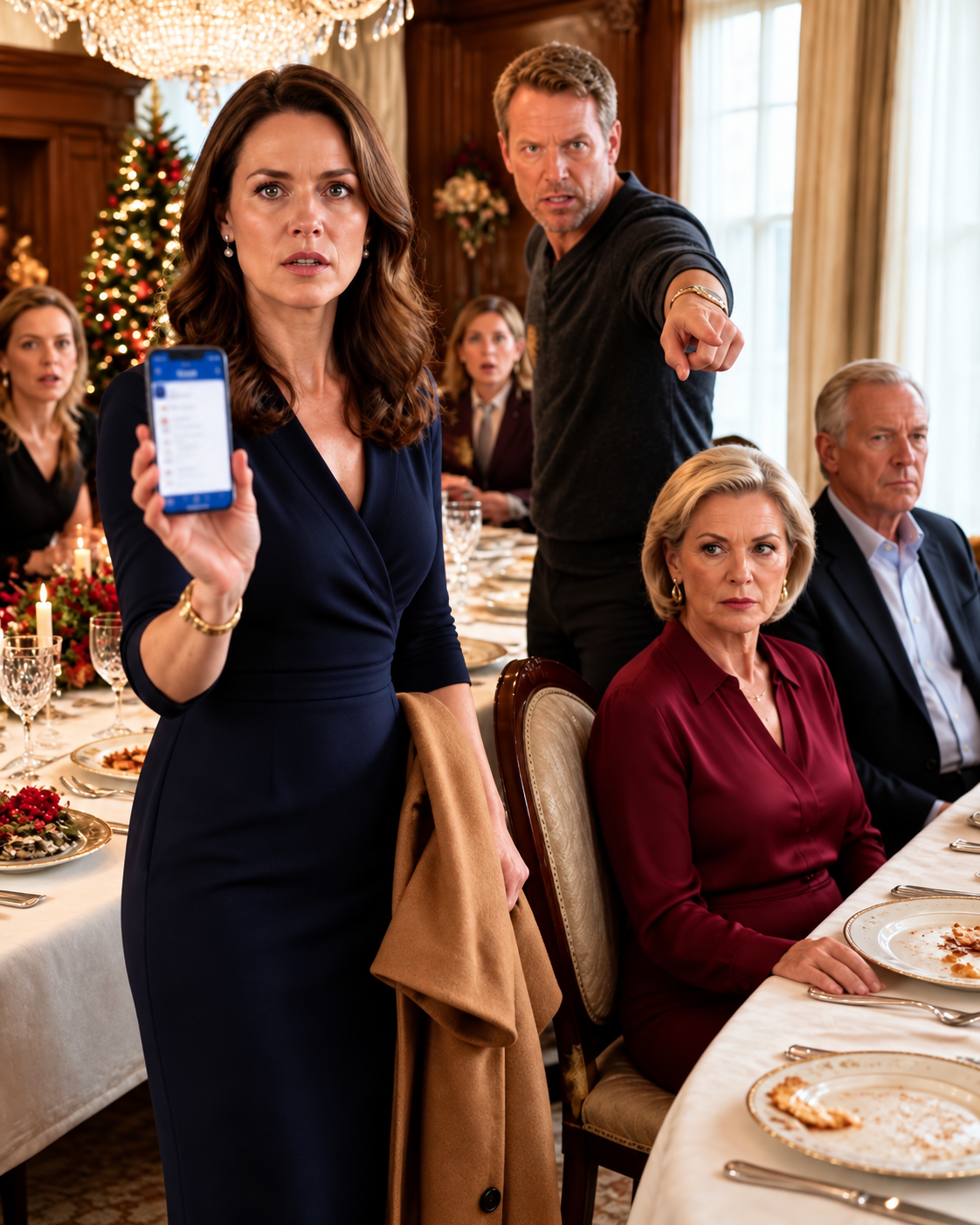
Thirty minutes after my mother dumped a plate of Christmas dinner into my nine-year-old son’s lap, I canceled the mortgage payment that had kept her house from financial trouble for three years.
But that wasn’t the decision that changed our family forever.
My name is Rachel. For thirty-six months, I had paid the mortgage on my parents’ house in Maplewood. My father, Robert, claimed his retirement income wasn’t enough. When my brother Daniel accumulated $14,000 in credit card debt, I paid that off too.
I never asked for repayment. I only wanted my family to be safe.
Unfortunately, they mistook my kindness for weakness.
That Christmas Eve, my son Ethan wore a new emerald-green sweater he had chosen himself. He was excited to see his grandparents.
Dinner began peacefully until Daniel suddenly announced:
“Some people should actually contribute to this family instead of expecting everyone to thank them.”
I stared at him.
“I’ve paid this house’s mortgage for three years. I also cleared your debts. What more do you expect?”
Daniel laughed.
“Money doesn’t make you better than us.”
Before I could respond, my mother, Linda, grabbed Ethan’s dinner plate and overturned it into his lap.
Hot potatoes, meat, and gravy covered his sweater.
He screamed.
“That’s what happens when people take things they don’t deserve,” Linda declared.
My son had done absolutely nothing wrong.
I rushed to him, checking his skin while he cried against my shoulder.
Then Daniel pointed toward the door.
“Take your kid and get out!”
I looked at my father, expecting him to intervene.
Instead, he said, “Rachel, you always ruin everything.”
Something inside me finally changed.
I picked up Ethan’s coat.
“You’re right,” I said quietly. “I shouldn’t keep ruining things.”
At the doorway, I opened my banking app.
The next mortgage payment was scheduled for midnight.
I canceled it.
Then I disabled every recurring payment connected to my parents or brother.
For the first time in three years, I would spend my money protecting my own family.
At urgent care, a doctor examined Ethan. Thankfully, the burns were superficial and would heal.
But when we returned home, Ethan asked something that broke my heart.
“Mom, did Grandma hurt me because I’m bad?”
I knelt beside him.
“No, sweetheart. She hurt you because she made a cruel choice. You didn’t deserve any of it.”
He hugged me tightly.
Christmas morning, my phone rang seventeen times.
I finally answered my father’s call.
“The mortgage payment hasn’t gone through!” Robert shouted.
“I canceled it.”
Silence.
“You can’t do that. We’ll lose the house!”
“The mortgage is in your name, Dad. I’ve paid it voluntarily for thirty-six months. I’m not doing it anymore.”
Linda grabbed the phone.
“You’re punishing us over one little accident?”
“An accident?” I repeated. “You deliberately threw hot food at a nine-year-old child.”
“He needs to learn respect!”
“No, Mom. You need to learn that hurting my son has consequences.”
I hung up.
Over the following weeks, Daniel sent furious messages, calling me selfish and threatening to turn the family against me.
Then I received an unexpected call from my aunt Margaret.
She had spoken with Robert and uncovered something I hadn’t known.
For nearly two years, my father had been giving Daniel hundreds of dollars every month from his retirement income, while telling me he couldn’t afford the mortgage.
My parents weren’t merely struggling.
They were choosing to support Daniel because they knew I would cover the difference.
I felt sick.
I gathered my bank statements, the $14,000 debt settlement confirmation, and every mortgage receipt.
The total I had contributed was staggering.
And still, they had treated my son like an unwanted guest.
Three months later, my parents put their house on the market.
Without my payments, they couldn’t comfortably maintain it. Daniel refused to contribute, claiming he had his own expenses.
The house eventually sold, and my parents moved into a smaller apartment.
One afternoon, Robert came to my door alone.
He looked older.
“I should have stopped your mother,” he whispered. “And I should have thanked you years ago.”
I listened.
“You’re right,” I answered. “But Ethan is the person you need to apologize to. And an apology doesn’t automatically mean you’ll be part of his life again.”
My father nodded.
He left a handwritten letter for Ethan, taking responsibility for staying silent that night.
I kept it until my son was ready to read it.
Linda never offered a sincere apology. Daniel stopped contacting me when he realized the money was gone.
And I stopped chasing their approval.
The following Christmas, Ethan and I celebrated at home with friends who loved us.
He wore another green sweater.
As we sat down to dinner, he smiled and said:
“Mom, this Christmas feels safe.”
I held his hand beneath the table.
For thirty-six months, I had believed saving my parents’ house meant keeping my family together.
But I finally understood something much more important.
A home isn’t worth saving if the people inside it are willing to hurt your child.
And the best Christmas gift I ever gave my son wasn’t something money could buy.
It was the promise that I would never again allow anyone to mistreat him just because we shared the same blood.